Unacceptable
Unspoiled
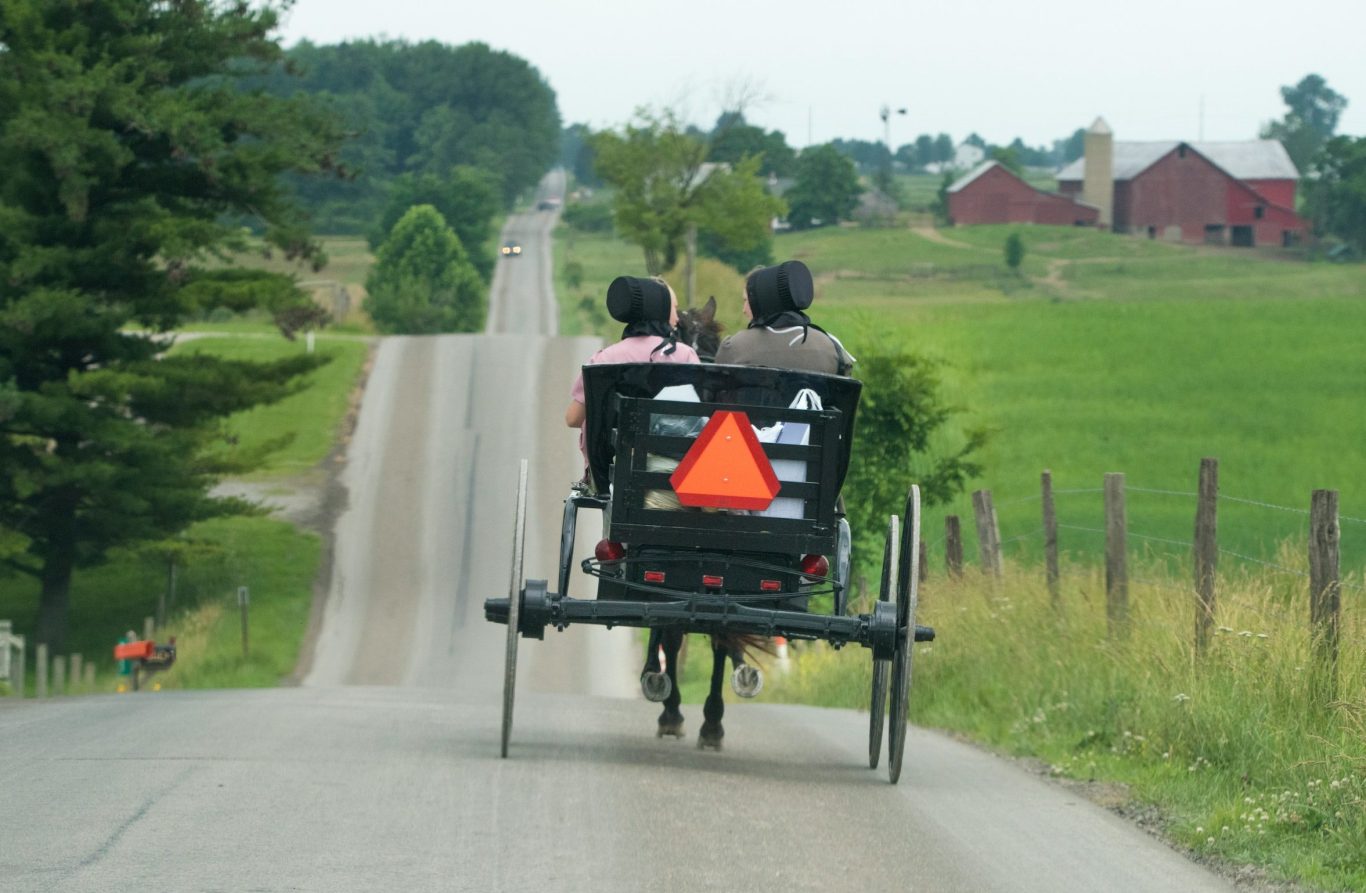
The clip-clopping of hooves along the rural highway sounded as exciting as the jingle of Santa’s reindeer to me, but even better, because it was real. My college campus was adjacent to Amish country on the rolling hills of the Western Reserve of Ohio. Mostly quiet and vibrantly gorgeous with colorful deciduous trees in the autumn, Hiram provided a unique environment for learning. I loved it. It was a peaceful space away from the hustle and bustle of the bigger world, a bubble of academia and growth. Idyllic.
The rolling hills that surrounded the school, however, made for a very long walk to procure even basic groceries and sundries. The nearest town, Garrettsville, was four undulating miles away. Not everyone was fortunate enough to have their own car. So the reality for some of us students was that during each term, we were a bit stuck. For me, it created a sense of being land locked and trapped. Having grown up adjacent to the vastness of Lake Erie - an ever present passage to freedom - the tree-laden hills of Ohio made me feel a bit claustrophobic. Especially during Winter Quarter.
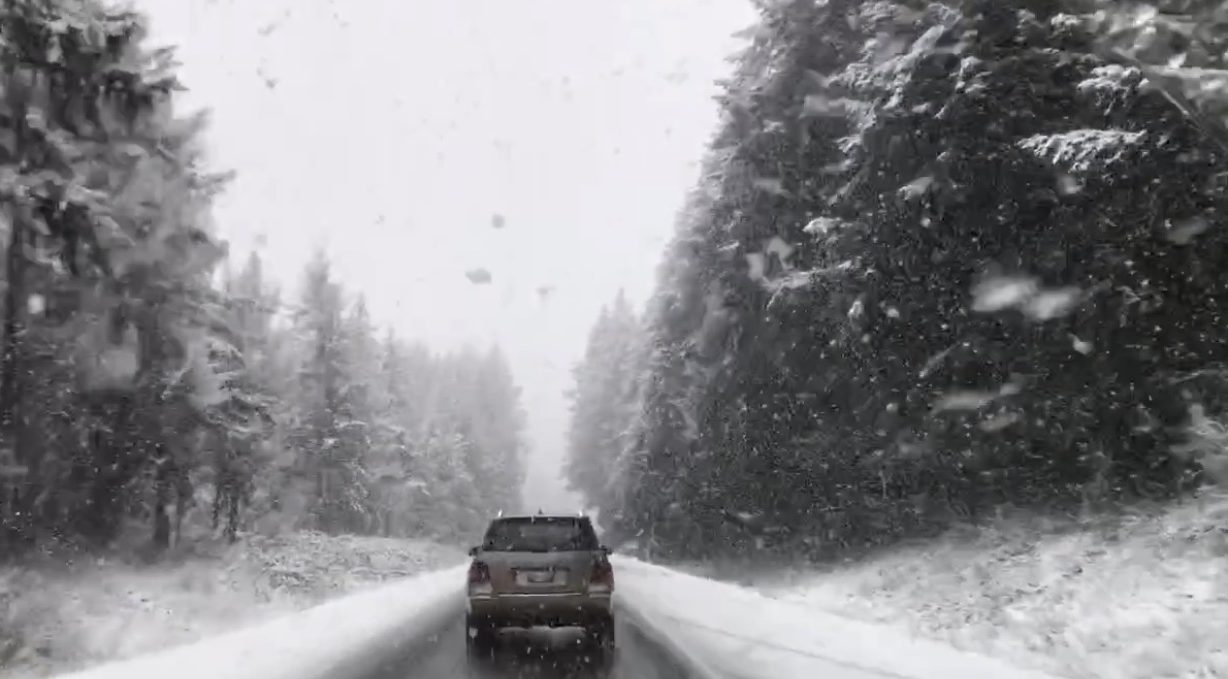
Not NE Ohio or Western PA - A "blizzard" in Black Diamond WA February 2018
The Hiram winters of the early 1990’s were plentiful with snow. When I was fortunate enough to finally have a car, driving the treacherous 100 miles home along Route 11 and Interstate 90 through snow was harrowing. I remember trying very hard to focus on the road during a blizzard while heavy, swirling snow pelted my windshield. Staying in the right-hand lane rut and following the tail lights of the truck in front of me during the white-out was adrenaline draining.
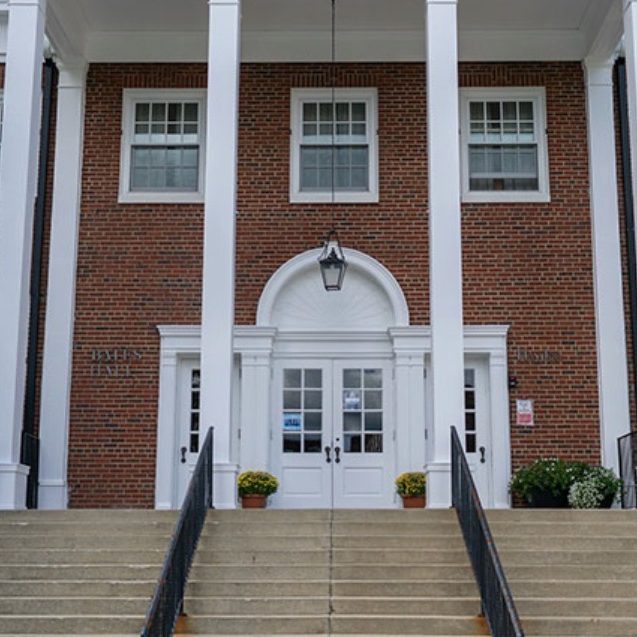
Bates Hall, Hiram College, Hiram, Ohio
Thankfully there were many enjoyable activities that Hiram offered on campus to offset the demanding academic rigors and long, snow-bound winter weeks. One of those delicacies was movies hosted in Hayden Auditorium inside Bates Hall.
Bates was a large brick, Federal style building atop a crest of a hill, down the street from my dormitory - a snowy trudge away that I was happy to endure. Outfitted with mittens and a hat, I felt a rising anticipation as I ascended the many steps up to Bates. An eager pilgrimage was a successful accomplishment in securing some much needed entertainment.
Once inside, the world transformed. Warm drafting wooshes of air accompanied a smell of dust and popcorn. Dimmer lights contrasted with the blinding white snow outside, requiring time for my wide eyes to adjust. Stomping the snow off my boots in ritualized fashion, the destination was reached and the mittens burrowed into my coat.
Thick wooden doors clasped shut behind me and the mundane paused for a while. Rows of theater seats descended towards a stage which hosted a very large screen in the back. After my friends and I found seats and settled in, the lights dimmed and a familiar film played. It was one of those endearing Hiram traditions that have a fond place in my memory.
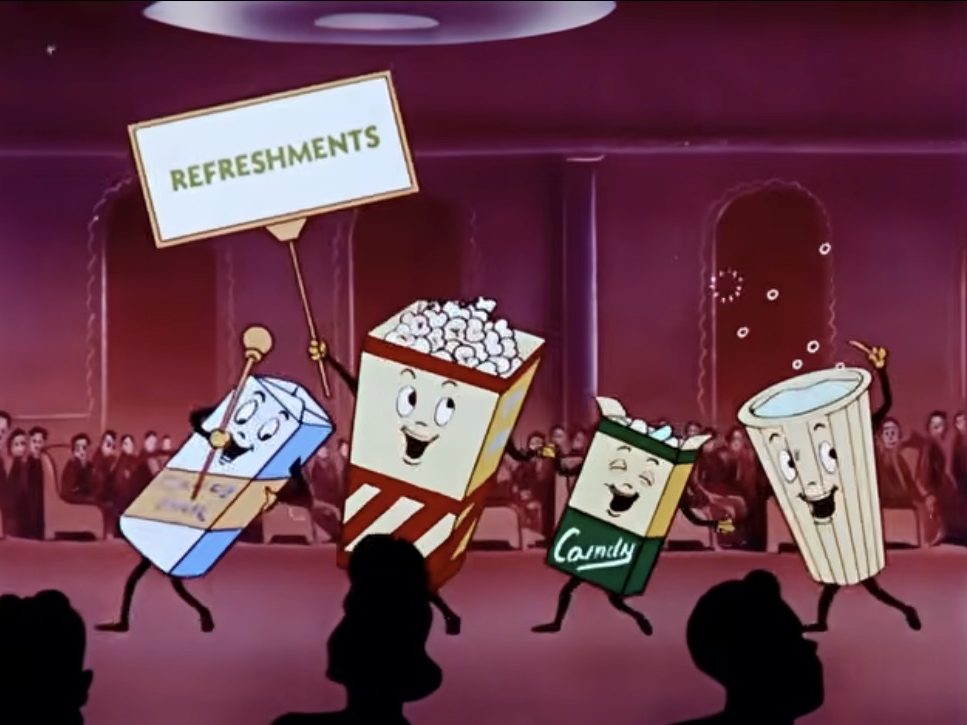
As an homage to the American theater culture, Hiram started each movie with a showing of Dave Fleischer’s iconic refreshment trailer “Let’s All Go to the Lobby.” A blue-and-white package of gum enthusiastically twirled a baton. A red-and-white striped popcorn box excitedly held up a “Refreshments” sign. A happy green candy box and a smiley, fizzy pop marched in step across the screen. The peppy 39-second musical advertisement encouraged patrons to purchase food to a catchy jingle, promising smiles with their purchases.

Unilateral
Operating the film projector was a coveted student campus job because projectionists were paid to watch movies. Part of that job included watching “Let’s All Go to the Lobby” on heavy repeat, which, to some, was torture. One highly intelligent and surreptitiously devious student really disliked the clip of the dancing food, finding the saccharin sweetness and levity irritating. Her home life was rife with abuse and the irritatingly gleeful characters, she said, mocked her experience where there were no smiles.
Unbeknownst to anyone, over the course of two years, she gradually spliced the film, truncating the trailer, one frame at a time. Each edit would take her about 60 seconds to complete. Working entirely alone in the projection booth, no one ever caught her in the act.
Trimming a film print was a straightforward, mechanical process done using a tabletop splicer. First, she would lay the film over a small lightbox and fit its sprocket holes onto tiny metal pins to hold it flat. She used the splicer's blade to make a straight cut along the line between two picture frames. Next, she pulled the film forward, made a second cut, and threw away the section she had removed. Finally, she lined up the two cut ends end-to-end, stuck a piece of clear tape across the seam, and used the splicer’s punch to clear the tape out of the sprocket holes so the film could run through the projector without catching.
It was done so carefully that it went on for those 2 years, unnoticed. By the time she graduated, she had shortened it to under 20 seconds.

Unapologetic
One day it dawned on a few of us that the snack bar bumper was much briefer. We asked her if our perceptions were correct. She giggled and her eyes darted all about. Very bad at keeping secrets or secretly wanting the acknowledgement, she informed us of what she had done. Beet-red with a mix of hilarity and total lack of regret, she explained her disdain for the short film.
While my friends reacted with shock, I instinctively smiled and nodded, swallowing my own annoyance to make her feel safe. Knowing what was happening at home, I felt for her. She was exerting some control over a world that naively smiled as she suffered in silence. It made sense to me. She was angry at a perceived unfairness of the lives of those unscathed.
She had no remorse and didn’t take accountability for the damage that had been done. Although it was clever, her choice deprived thousands of Hiram students of a piece of American film history.
The movie print wasn’t her only target. Somehow she managed to get ahold of the keys to the Psychology Department on the other side of Bates where the laboratory ground squirrels were caged. Under the cloak of darkness, she freed all the rodents, but not all of them wanted to leave the building. This wasn’t part of her plan.
She was not ethically aligned with the psychobiology students in my class who were preparing to conduct brain surgery on the squirrels. Instead of organizing a demonstration against animal cruelty, she took it upon herself to make another unilateral decision without compunction. Her choice directly impacted my coursework. The research I conducted with my eventually-replaced ground squirrel was pivotal, clarifying my focus toward applied psychology and leading directly to the healing profession that became my beloved career: counseling.

Unaccountable and Unaccounted For
Over the years I’ve had to learn that what works for someone may be understandable and yet at the same time it can hurt me, too.
The projectionist was irked and angry. She was ethically perturbed and very distressed. Although I could connect the dots and make sense of her behavior, she didn’t have the right to do what she did. Having a reason - even a deeply felt one - did not give her the right to destroy shared property or sabotage a collective experience. It is my understanding that she was never held accountable, and never acknowledged or felt remorse for how her actions affected others.
I never confronted her because my empathy blinded me to my own right to be upset. Growing up with a dying mother and an angry, depressed father, I had learned to navigate tension by absorbing it. Where her pain drove her outward to disrupt shared rules, mine drove me inward to keep the peace. Hyper-empathy became my survival mechanism.
For a long time, I viewed my habit of seeing the good in people strictly as a virtue. In reality, over-functioning empathy without boundaries became a pattern of self-abnegation. By constantly prioritizing the internal motives of others above my own valid reactions, I repeatedly silenced myself and absorbed the cost of their behavior. Sometimes I didn’t even realize that I had the right to have reactions because I was taught to have radical compassion for others. I couldn’t see the injustices.
Self-abnegation happens when we treat another person's distress or justification as a reason to erase our own hurt. Recognizing someone’s perspective explains their choices, but it doesn’t eliminate accountability. You can hold compassion for a person's state of mind while remaining firm that their actions were unacceptable. Understanding the story behind the damage is human, but swallowing the impact at your own expense is self-abandonment.
Unresolved
She and I didn’t interact with one another much after that. I was crazy-busy with my academics and activities and lived in a different dormitory. We were never more than acquaintances and didn’t share any classes together. I never addressed my feelings to myself, let alone to her and therefore the situation was left in disrepair. There was no opportunity. I’m not sure I had the emotional maturity at that age to have allowed it to occur.
Rebuilding trust requires leaving the opportunity for a genuine apology to occur. When we rush to relieve relational tension, excuse hurtful behavior, or offer quick reassurances before the impact has been named, we prevent the other person from taking responsibility. I often rushed to “It’s ok. Don’t worry about it,” when someone did something hurtful to me. Instinctually I’d avoid any type of confrontation. I didn’t allow a pregnant pause and ran straight for mercy.
As I matured, I learned that remaining quiet isn’t an act of hostility. It’s a necessary boundary. Genuine trust cannot be restored when one person does all the work to repair the connection. It requires stepping back and allowing the other person to acknowledge what they did, express remorse directly, and demonstrate a commitment to change through their actions.
I doubt an apology would have come from the projectionist. She openly felt no regret. But over the years, I’ve realized my silence spared her from the very discomfort she needed in order to develop empathy. Over the years, I’ve also wondered if the ground squirrels that remained in Bates made a permanent home there, and if their descendants are still running through the building. If so, they’ve ironically been subjected to years of “Let’s All Go to the Lobby.”
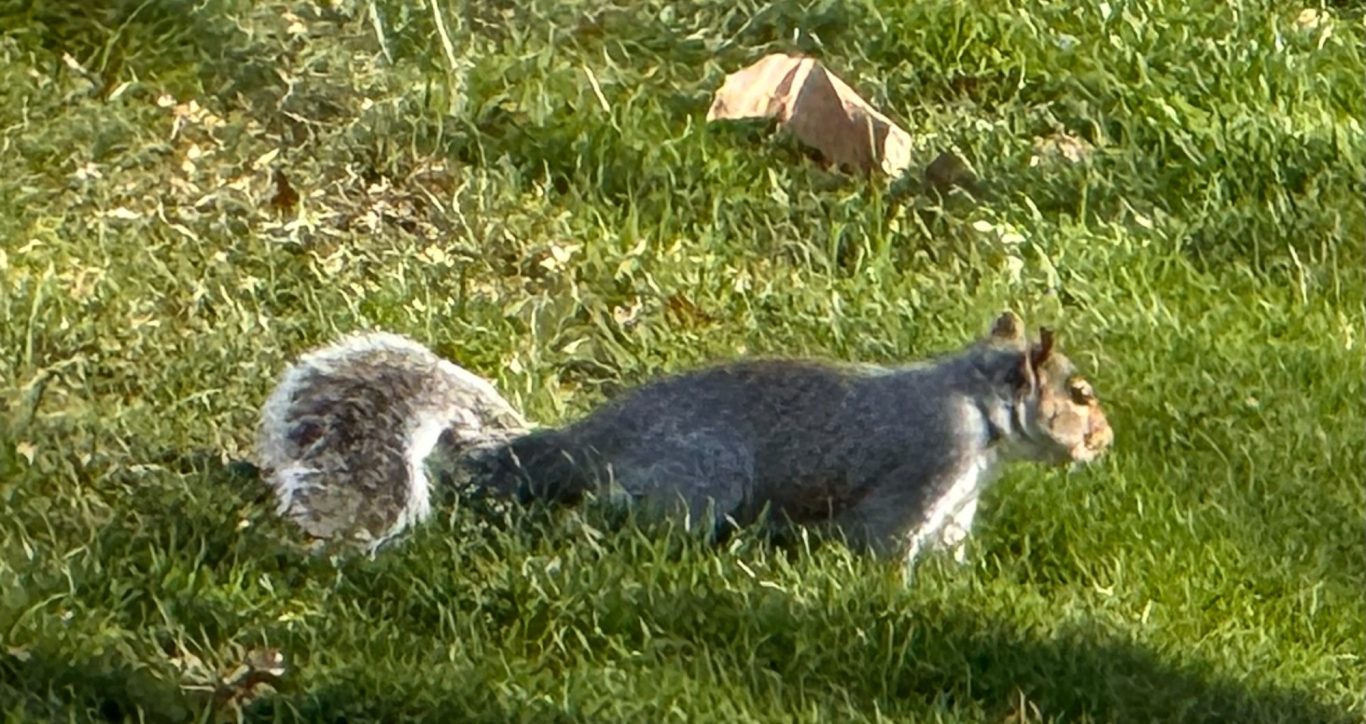
Not a Hiram Squirrel - this is an Enumclaw Squirrel November 20, 2025